
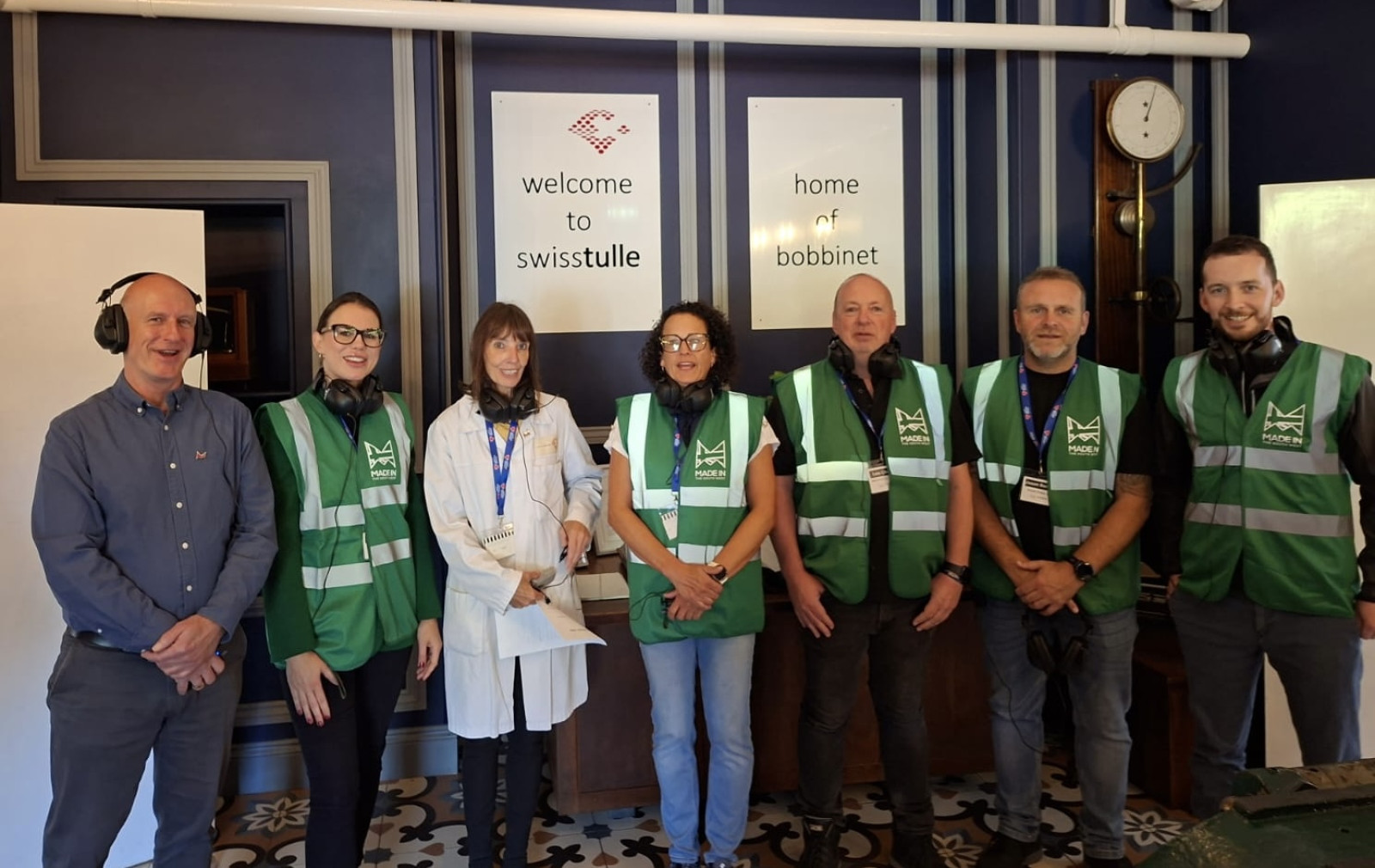
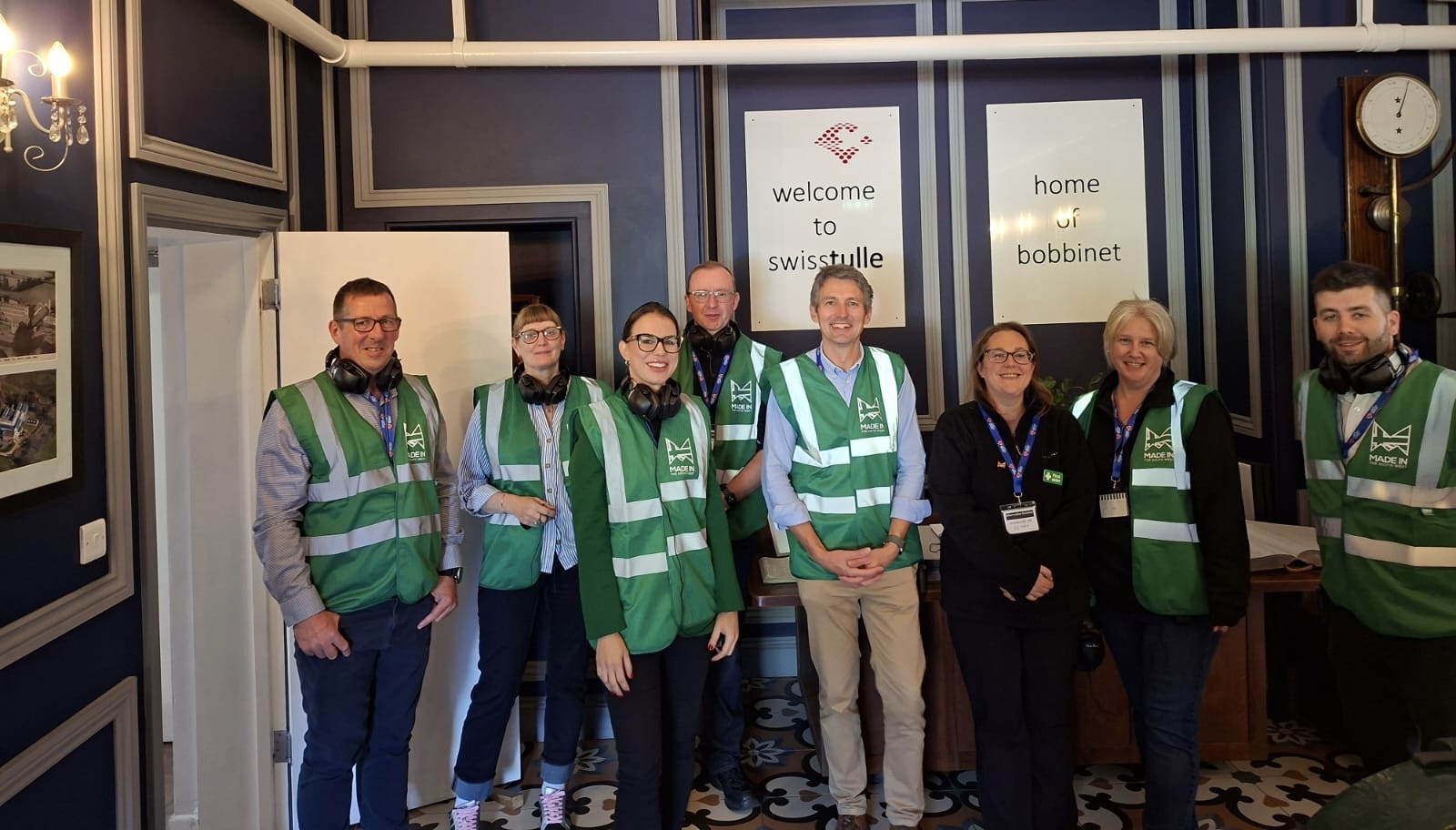
Made in the South West members visited Swisstulle’s historic Perry Street Works in Somerset, discovering how machinery rooted in the Industrial Revolution continues to manufacture commercially relevant textiles for modern markets.
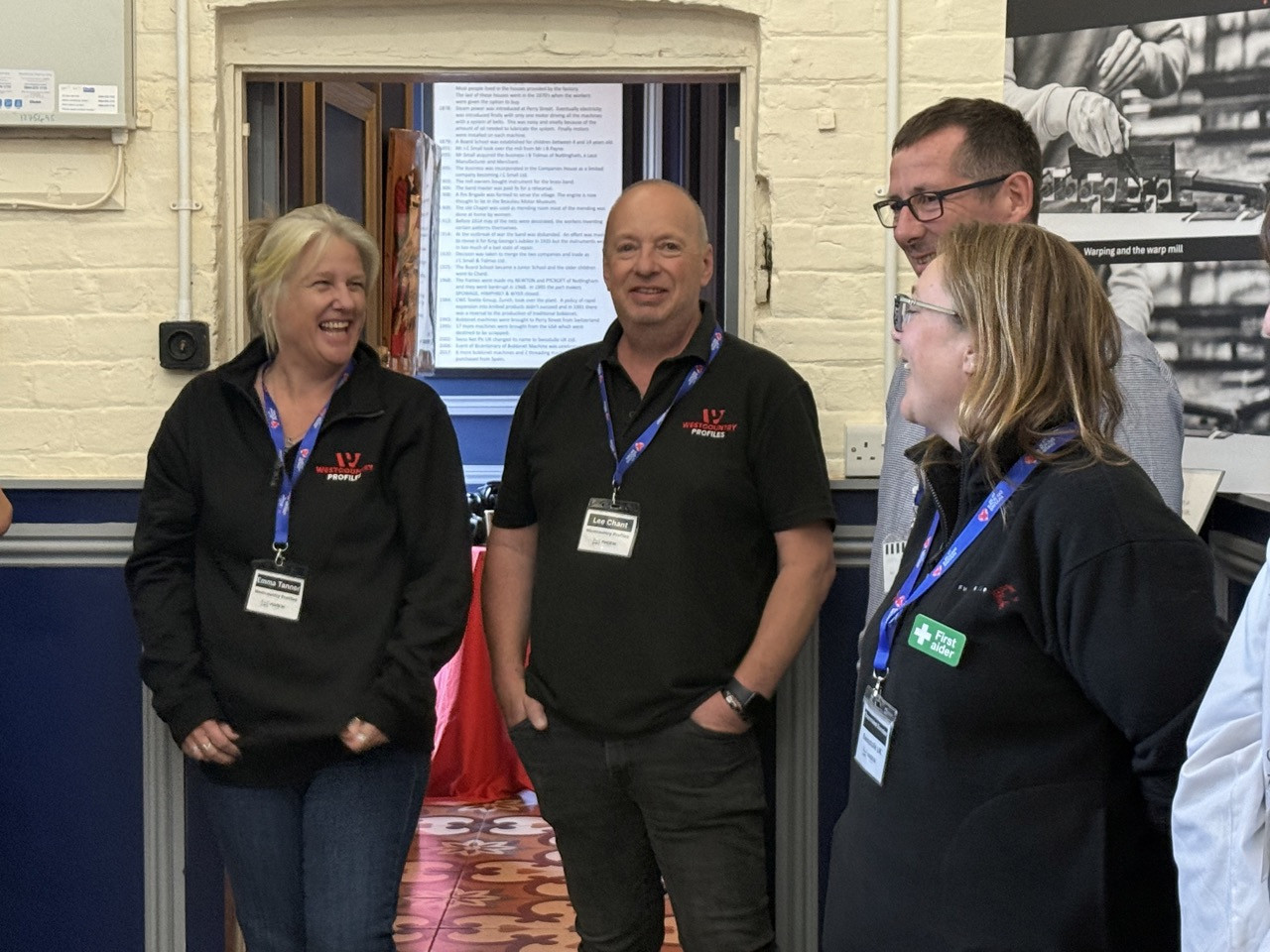
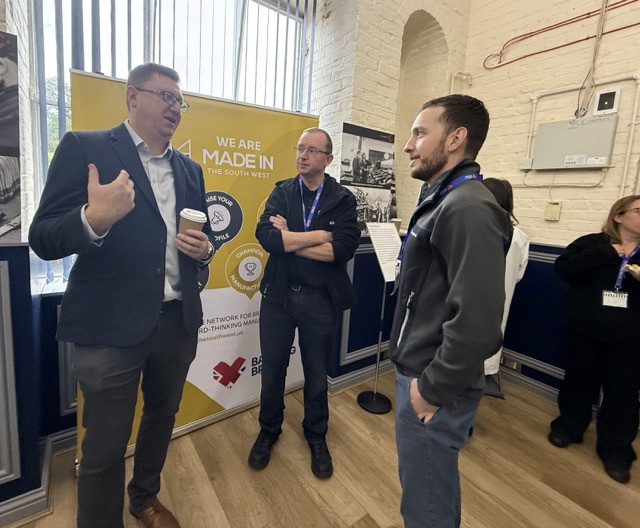
The factory tour began with refreshments and informal networking, giving manufacturers from across the region an opportunity to meet and learn more about one another’s businesses.
Each delegate introduced themselves and outlined their company’s capabilities, revealing potential connections across engineering, fabrication, temporary buildings, air movement equipment and digital systems.
Guests were then welcomed by Swisstulle General Manager Alan Adams, who introduced the history of Perry Street Works and the specialist bobbinet manufacturing process they were about to see.
More Than 200 Years of Innovation
The origins of bobbinet date back to 1803, when John Heathcoat invented the first hand-operated bobbinet machine. A powered machine followed in 1808, with the technology patented in 1809.
Perry Street Mill was built in 1825 and has remained closely connected with bobbinet production ever since. During the following two centuries, water power gave way to steam, ownership changed, businesses merged and markets evolved.
Swisstulle adapted alongside them.
“The history of Swisstulle is a history of adaptation,” Alan told members. “Survival is never about standing still. It has always been about adaptation.”
Some of the bobbinet machines operating at the site are believed to be approximately 150 years old. These are not museum exhibits, but productive industrial assets which continue to manufacture commercially relevant fabrics.
“What you’re going to see is Victorian engineering delivering modern value,” Alan explained.
Historic Machinery Serving Modern Markets
Historically, bobbinet was associated with lace, bridalwear, fashion and luxury textiles. Those markets remain important, but its applications have expanded considerably.
Today, Swisstulle produces fabrics for markets including bridal and fashion, parachutes, film and theatre, embroidery and technical textiles. Alan also explained how bobbinet is used in specialist defence applications and holographic projection screens – markets that did not exist when the machinery was designed.
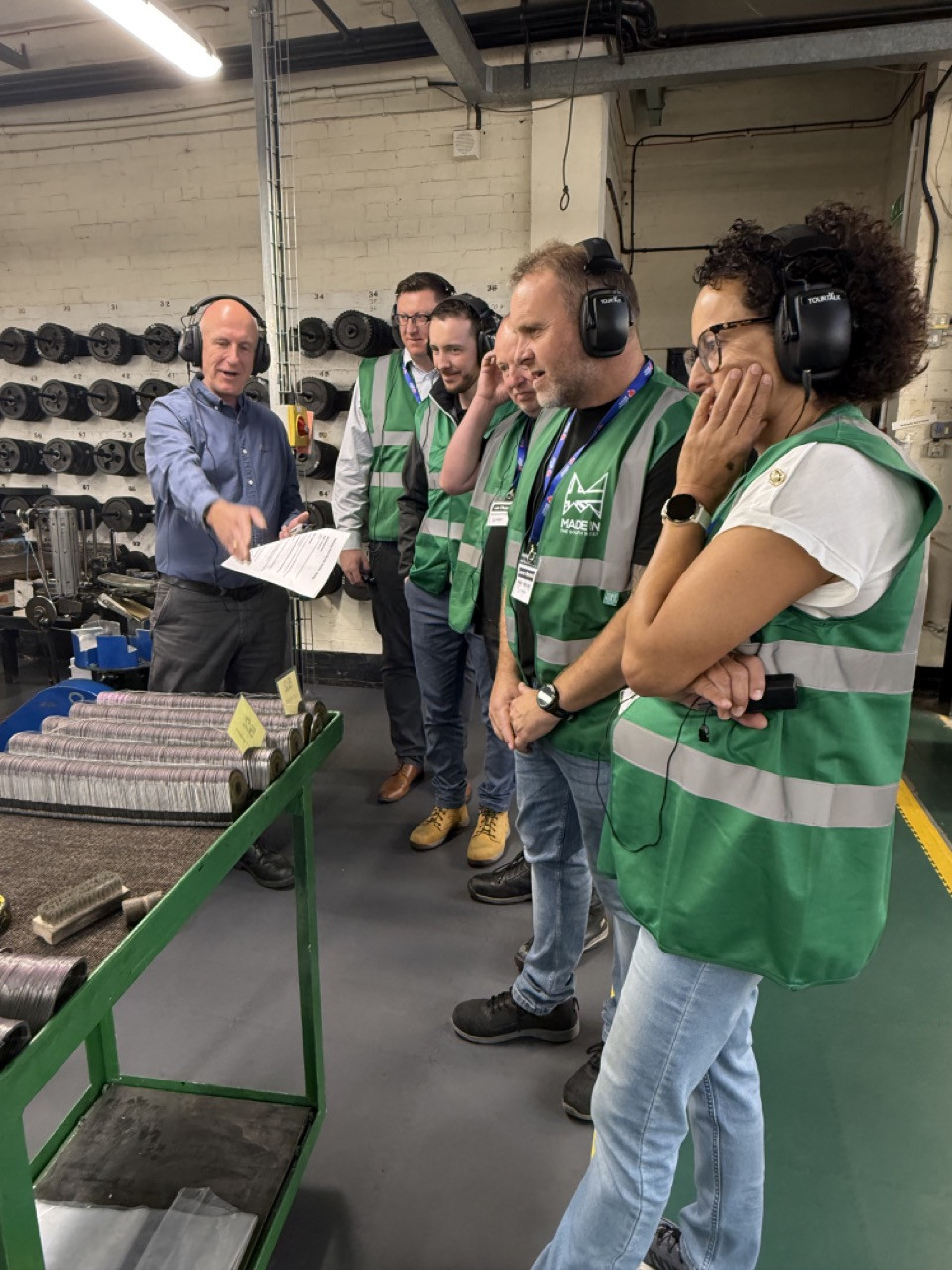
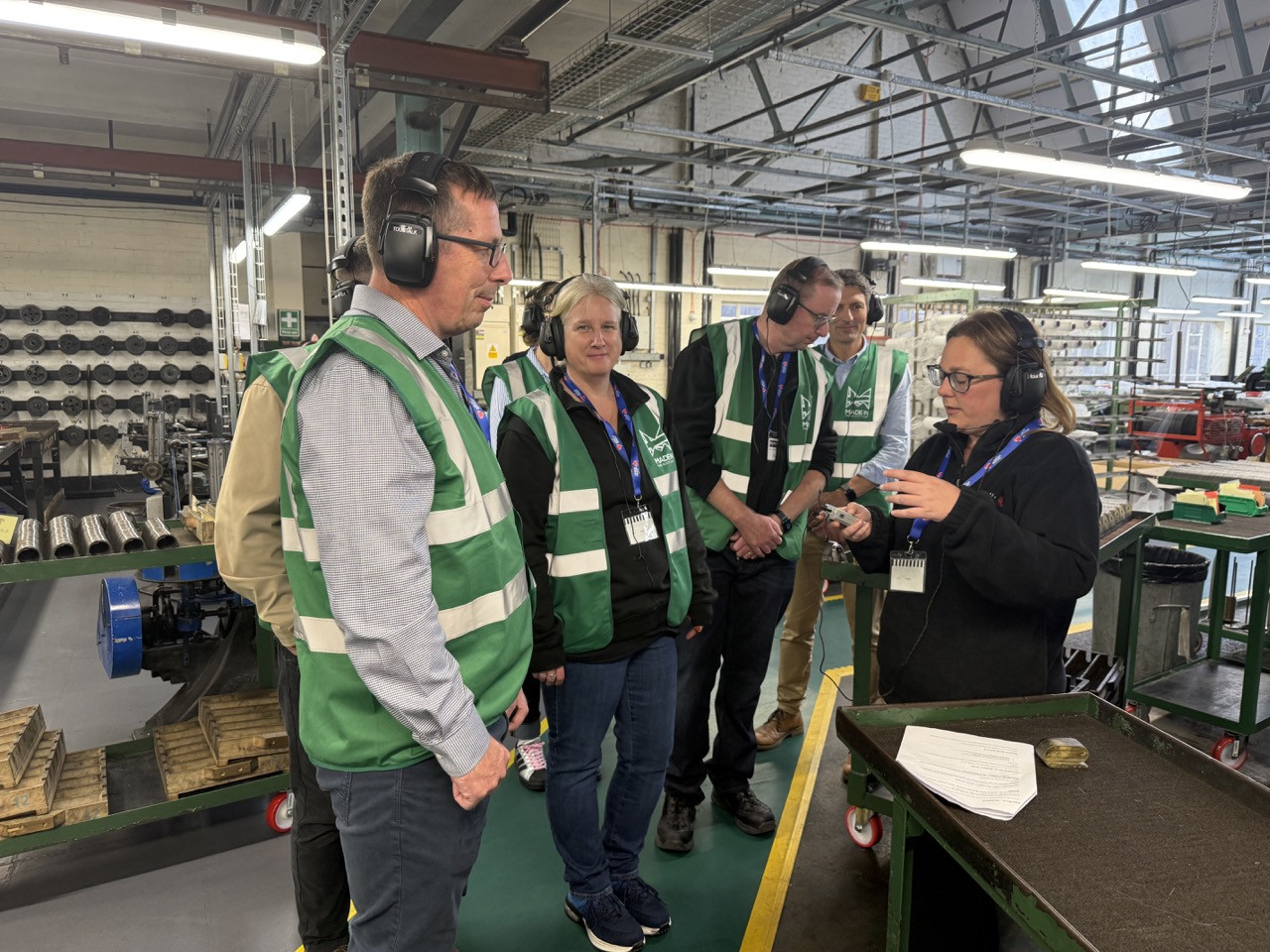
Members saw the complexity of the process on the factory floor. Each machine works with sets containing approximately 5,000 individual bobbins, which pass between the vertical warp threads to create the net structure.
Although the underlying mechanical principle has remained largely consistent, the materials passing through the machines have evolved, allowing the technology to meet modern performance requirements.
Visitors also saw the inspection and mending operations, where fabric is examined by hand and experienced employees repair imperfections before it progresses. Suitable leftover yarn is carefully retained and reused, helping to reduce unnecessary waste.
Preserving Specialist Capability
Alan explained that Swisstulle’s greatest long-term challenge is not necessarily preserving its machinery, but retaining the knowledge required to operate and maintain it.
The company’s average length of service is approximately 12 years, while two employees have each completed 46 years with the business. It can take between three and five years for an engineer or twist hand to become fully competent.
“Our skills are harder to replace than the machines,” Alan said.
Swisstulle is responding through succession planning and employee development, with a trainee currently learning the specialist skills needed to support the process in future.
Maintaining machinery of this age presents another challenge. The original machine builders and many specialist component suppliers no longer exist, meaning replacement parts cannot simply be ordered.
Swisstulle works with local engineering companies to reverse engineer components when required. Its parent company has also established machine-building capability, while the factory’s Brass Shop repairs, adjusts and reproduces specialist parts to keep the equipment operational.
Supporting Heritage Through Digital Transformation
Despite the age of its machinery, Swisstulle applies modern practices including visual management, Kanban systems, just-in-time principles and continuous improvement.
The next stage of its journey will focus on digital transformation, including ERP implementation, real-time production monitoring, paperless information systems and predictive maintenance.
The aim is not to replace the company’s heritage technology, but to provide better information and systems around it.
“For us, digital transformation is about preserving capability and improving visibility,” Alan explained. “We’re looking to bring 21st-century systems in to support 19th-century technology.”
By 2030, Swisstulle aims to become a more data-driven business with improved production visibility, stronger machine utilisation and a clear pathway for transferring knowledge to future generations.
A Lasting Impression
The visit demonstrated how industrial heritage and innovation can operate together. Swisstulle’s machines have remained recognisable for generations, but the materials, applications, maintenance methods and production systems surrounding them have continually evolved.
Summing up the experience, Ben Arnold, Managing Director of Made in the South West member PECO – Pritchard Patent Product Company Ltd, said: “I found the machines quite mesmerising. Trying to understand the mechanics as an engineer was mind-blowing. There is also something about the history of somewhere like this – you can’t help but be amazed by it.”
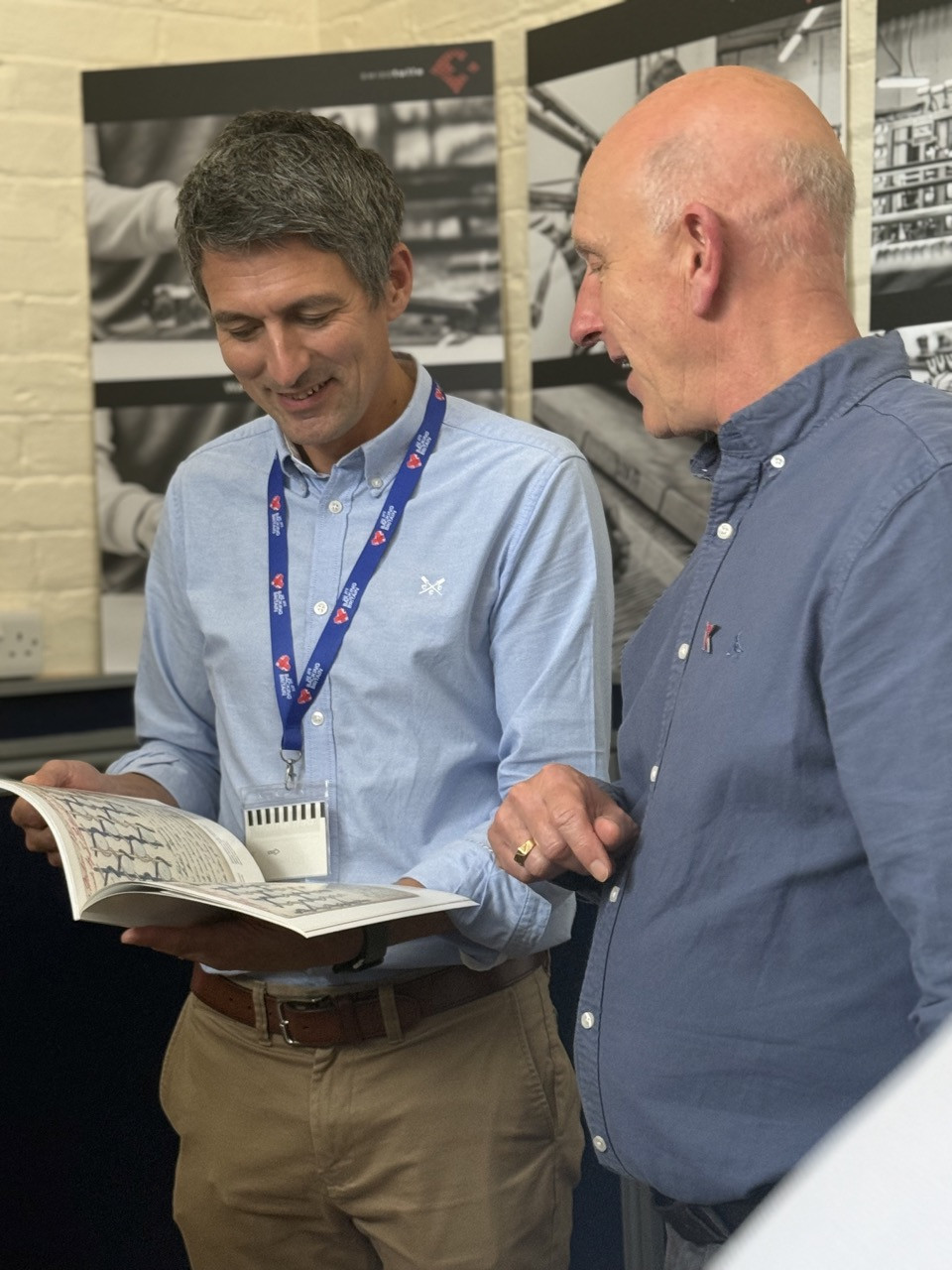
Made in the South West would like to thank Alan Adams and the entire Swisstulle team for opening their doors, sharing their expertise and giving members a fascinating insight into one of Britain’s most distinctive manufacturing capabilities.
Step Inside Britain’s Best Factories
Swisstulle is just one of the remarkable manufacturers opening its doors to our community. See what is being made, meet the people behind it and take practical ideas back to your own business.