
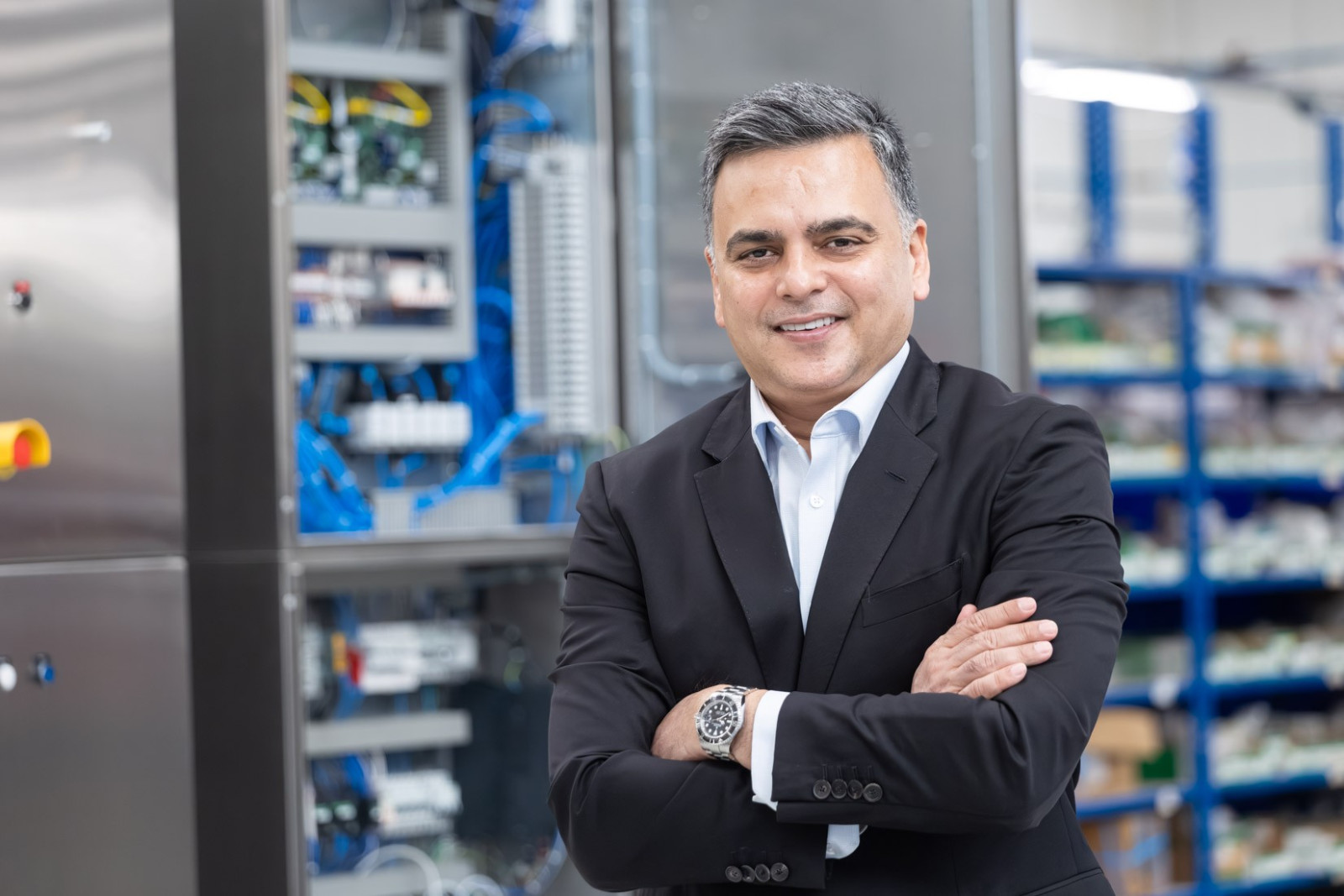
Against a challenging backdrop for UK industry, one Midlands manufacturer is targeting record turnover as it pursues an ambitious goal of reaching £100m by 2028.
Growing a manufacturing business takes more than winning new orders. You need to identify the right markets, ensure your operation can deliver on time and in full, develop people who can lead the next stage of growth and use technology to remove the constraints holding you back.
That’s the approach Pinaki Banerjee is taking at PP Control & Automation (PP C&A), an award-winning manufacturing outsourcing specialist in the West Midlands. Since joining 12 months ago, Pinaki has set his sights on growing turnover from £28m in 2025 to £42m in 2026, before reaching £100m by 2028.
The £42m target would make 2026 a record year in the company's 60-year history, driven primarily by organic growth rather than acquisitions. Speaking at Made in Group’s latest Industry Meet-Up, Pinaki shared the four pillars of his growth strategy and why each needs to work alongside the others.
1. Focus on the right markets
The first step is to decide where to compete and to be disciplined about the work you turn down. One of Pinaki’s priorities was to sharpen PP C&A’s market segmentation. He believes businesses can become too reliant on their existing networks and contacts, pursuing opportunities because a relationship exists rather than because the customer fits the company's strategy.
“You need to decide where you are not going to go. If salespeople spend time researching and meeting prospective customers in sectors the business has chosen not to target, that effort is being diverted from more promising opportunities,” Pinaki explained.
Market intelligence is now helping PP C&A make those choices more systematically. An AI tool generates monthly reports on activity in its target sectors, highlighting developments such as energy companies winning new contracts. This helps the team identify potential opportunities and approach customers at the right time.
Energy and infrastructure have become important growth markets for the business, which has secured contracts worth more than £10m in these sectors, alongside its traditional original equipment manufacturer (OEM) customers.
The company is also looking to build a broader base of recurring business. Having historically relied on around 15-20 regular accounts, Pinaki wants to increase that number to 50. The newly introduced PP Initiative for Sales Excellence (PISE) supports a more structured approach to understanding individual customers and identifying opportunities to develop those relationships.
The aim is to combine a clear view of where the business can compete with timely intelligence about where opportunities are emerging.
 - Pinaki Banerjee - CEO - ii.jpg)
2. Remove operational constraints and prepare for demand before it arrives
Winning a major new contract can quickly expose weaknesses in shopfloor capacity, material availability, supply chain performance and engineering resources. At PP C&A, Pinaki has focused on improving the flow of work through the operation.
Measures include organising work around customer-specific cells, introducing SQCDP performance measures (safety, quality, cost, delivery and people) and strengthening supply chain leadership to improve material availability and predictability.
The company has also added engineering capacity in India to help clear a backlog and improve its ability to service customers.
Another challenge is knowing when to invest in additional capacity. Commit too early and anticipated orders may never materialise; wait too long and the business may struggle to meet delivery deadlines when they do.
At PP C&A, the interval between an initial enquiry and an order can range from six to 12 months. The company uses a four-stage customer relationship management (CRM) process to track opportunities, helping the leadership team to judge when prospective business is sufficiently advanced to justify committing resources.
3. Build leadership capacity beyond the boardroom
Pinaki believes middle management is key to scaling a business. Managers need clear objectives, the confidence to make decisions and a strong understanding of the wider business strategy.
At PP C&A, that has meant introducing quarterly town halls to share financial results, discuss what is working and what is not, and explain plans to address performance gaps.
The company has also launched an internal development initiative called Spark. Senior directors share their knowledge and experience with employees with the potential to become managers, helping them develop a broader understanding of the business and prepare for greater responsibility.
For Pinaki, the objective is to improve alignment and speed up decision-making. Operational improvements cannot depend entirely on instructions from the top; people closest to the work need the authority and capability to make good decisions every day. This is particularly relevant for businesses moving beyond the scale at which founders or senior leadership team can remain involved in every detail.
“Growth requires more than additional headcount. Develop managers who can lead teams, solve problems and take responsibility without every decision having to go through the top.”
4. Use AI to solve a defined business problem
Artificial intelligence is attracting plenty of attention, but Pinaki’s advice to manufacturers is to start with the problem, not the technology.
Engineers at PP C&A previously had to work through technical PDF documents running to almost 1,600 pages to extract the information needed to produce bills of materials and estimate labour requirements. The process could take days. A bespoke agentic AI programme, built around the company’s manufacturing requirements, has reduced this work to hours – delivering a 36% recovery in headcount capacity.
Human oversight remains essential, Pinaki noted. The technology supports the work; it doesn’t remove the need for engineers to check outputs and apply their expertise.
“The starting point should be a clear understanding of where time is being lost, what a successful outcome looks like and how the return will be measured. Only then should businesses decide whether to buy or build the technology needed to address it.”
Growth comes from connecting the four pillars
Pinaki emphasised that no single initiative will double your turnover in 24 months. New markets create demand, operational improvements make that demand deliverable, stronger management gives the business the capacity to scale, and targeted technology helps people work more productively. Each pillar reinforces the others.
For manufacturers with ambitions to grow, Pinaki’s approach offers four questions worth asking:
- Markets: Are we targeting the right sectors, actively ruling out distractions and building a sufficiently broad customer base?
- Operations: What is the biggest constraint on our ability to deliver more work, and when should we commit resources to meet anticipated demand?
- People: Do we have the management capability to support the next stage?
- Technology: Which clearly defined business problem could we solve to improve productivity?
Answering those questions won’t guarantee a £100m business. But it can help turn growth from an aspiration into a plan the whole organisation can deliver.
Join our Next Industry Meet-up!
The opportunity to openly discuss challenges, opportunities and solutions is what makes the Made in Group’s Industry Meetups so invaluable.
During these captivating virtual events, industry experts, thought leaders, and professionals gather to share knowledge, insights and best practices.
The goal is to foster collaboration, inspire innovation, and drive growth within the manufacturing community.
Each meet-up, we feature three engaging talks from Made Members, focusing on best practices around key themes that shape the future of manufacturing, including Global Trade, People & Skills, Future Factories, and Sustainability.
Presentations are followed by interactive Discussion Groups. These virtual roundtables enable Members to exchange ideas and gain further insights on their chosen topic.
We look forward to seeing you at the next one:
*Images courtesy of PP C&A